Having a "blank" on their resume pushes most candidates to self-eliminate before a recruiter has even glanced at their profile. Withdrawn applications, fudged dates, endless justifications... all of it for something that, in reality, carries far less weight than they think.
What you picture vs. reality
When you see that gap on your resume, you picture a recruiter frowning and flagging "Alert: unstable profile."
The reality? That's not what's happening at all.
Faced with hundreds of applications, a recruiter's first filter is binary: do the skills match the role? The resume gap only enters the equation second. And since 2020, recruiters have seen everything — layoffs, burnouts, career pivots, parental leave. A gap of 6, 12, or 18 months isn't an anomaly anymore. It's just life.
What the recruiter cares about isn't the absence. It's what you say about it.
The 3 mistakes that actually make recruiters doubt you
It's never the length of the gap that raises red flags — it's how it's handled:
- Radio silence: Jumping from 2022 to 2024 with nothing in between. The recruiter doesn't think "they must have traveled." They think "they're hiding something."
- The defensive stance: "Due to unfair circumstances..." A bitter or self-pitying tone creates more doubt than it ever resolves.
- Date massaging: Turning "January 2023 – March 2024" into "2023 – 2024" to hide nine months. Recruiters catch this immediately, and trust is gone.
The golden rule: One sentence, one fact, zero justification. You're informing — not pleading guilty.
How to say it in one sentence, without flinching
Here are direct, neutral phrasings you can drop straight into your resume timeline or cover note:
- Health / Burnout: "Medical leave (resolved) and skills assessment."
- Parental leave: "Parental leave. Back on the market as of Month/Year."
- Layoff: "Position eliminated in a restructuring. Time spent on training/project."
- Caregiving: "Family caregiving period (concluded)."
- Career change: "Career transition into Field — training and skill development."
How to work it into your application
- On your resume: Don't let the blank speak for you. Add a brief line in your timeline — "2023: Personal Project & Training" — to visually close the gap without making it a talking point.
- In your cover note: One short sentence to contextualize if the gap is recent.
- In the interview: Prepare a three-sentence answer, then pivot to what you bring today. The recruiter wants to know you're ready — not to relive your recovery with you.
Own your career story with Jobtae
The real problem with a resume gap isn't its existence — it's the break it creates in your story. A non-linear but coherent career will always outperform a perfectly smooth resume with no soul.
That's exactly why we built Jobtae.
Instead of rewriting and hiding your history with every application:
- You tell your career story once — in your own words, pauses and pivots included.
- Jobtae generates the right resume for each role.
The tool surfaces what matters for the position, without ever erasing the coherence and truth of your trajectory.
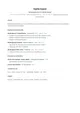
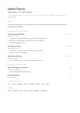
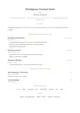
A sober, single-column layout like the Classic template keeps the reader's attention on your experience rather than on a visual timeline.
Key takeaway
- Silence and defensiveness do more damage than the gap itself.
- A factual five-word statement covers 90% of cases.
- Your career doesn't need to be linear to be compelling — it just needs to be true.